3rd October, 2026
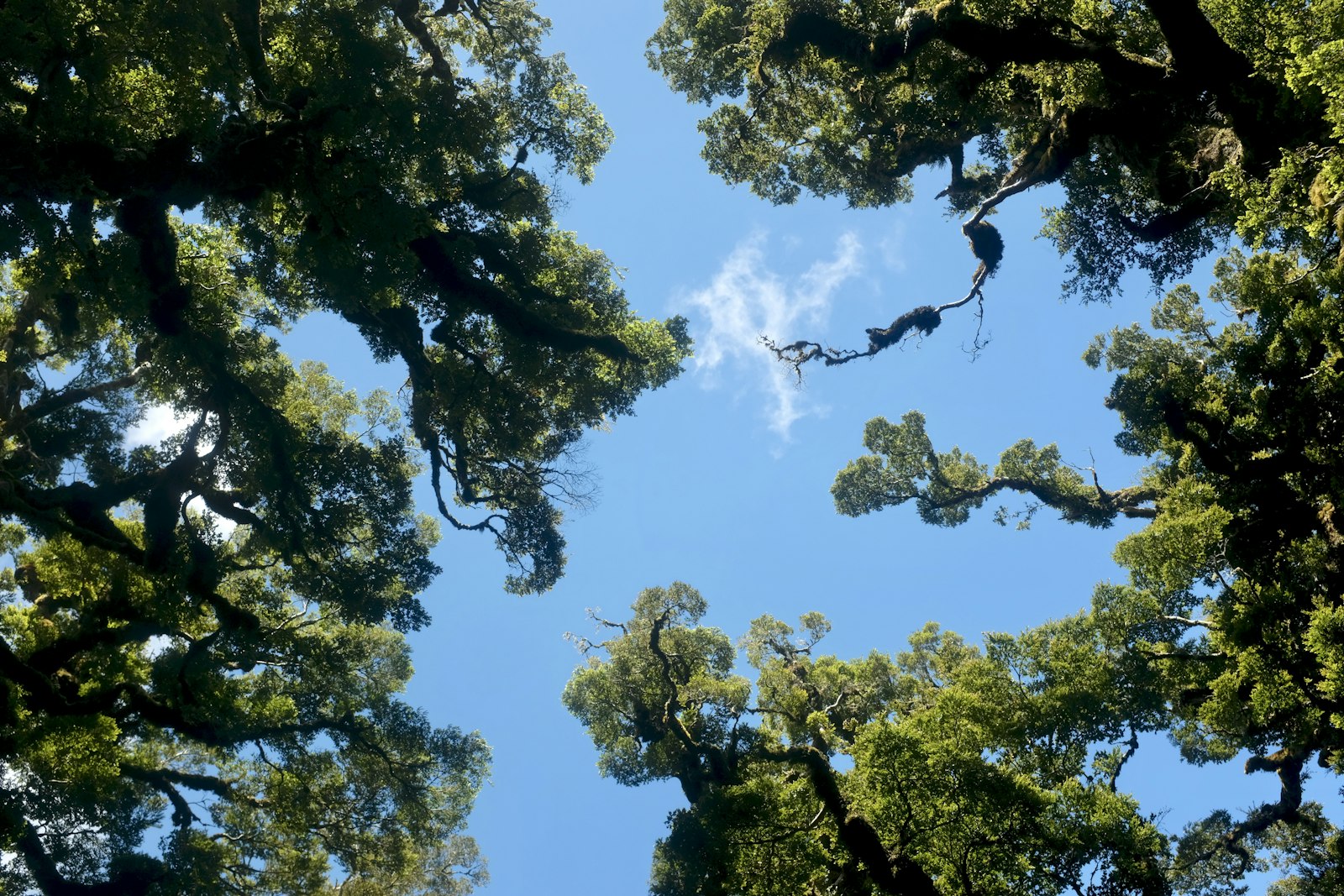
Trees are the nerves of planet earth, observed Dr. Kelvin Kamayoyo, Technical Advisor for African Rivers. In human physiology, a nerve is a bundle of fibres that transmits signals between the brain and different parts of the body, enabling sensation, response and life itself (Tortora and Derrickson, 2017). Without nerves, the body cannot feel, breathe properly or regulate itself. In the same way, trees function as the ecological nerves of the planet. They are a source of fresh air, they help to cool the atmosphere, and they sustain human life (IPCC, 2023). They recharge the energy of planet earth through photosynthesis, sequestering carbon dioxide and releasing oxygen that gives life to the atmosphere (FAO, 2022).
In an era of escalating climate change, we need to preserve the environment by co-existing with nature in order to defeat global warming. Human activities remain the major source of global warming, contributing over 75% of greenhouse gas emissions through deforestation, fossil fuel combustion and unsustainable land use (IPCC, 2023; UNEP, 2023). Therefore, every business entity must plant at least two trees to support planet earth, as part of its corporate responsibility.
The environmental importance of trees is evident in the multiple regulatory functions they perform that are indispensable to environmental stability. First, they cool the atmosphere through evapotranspiration and canopy shading, reducing urban temperatures by 2 to 8 degrees Celsius (Bowler et al., 2010). Second, they help to prevent floods and store water, supporting the breathing of planet earth in extreme temperature seasons. Root systems increase soil infiltration and reduce surface runoff, while forested catchments can store up to 40% more water than degraded lands (Ellison et al., 2017). Third, trees store carbon and conserve biodiversity, providing habitat for 80% of terrestrial species (FAO, 2022).
Africa is endowed with significant forest resources but is losing them rapidly. The continent has an estimated 130 billion to 180 billion trees, accounting for about 20% of the global tree population (Crowther et al., 2015; FAO, 2022). However, Africa loses between 3.4 and 4.4 million hectares of forest annually, translating into an estimated 600 million to 800 million trees cut per year for charcoal, agriculture expansion and settlement (FAO, 2022; UNEP, 2023). This rate of loss undermines climate adaptation and threatens river systems, including the Nile, Congo and Zambezi.
Global experience shows that inspiring leadership in tree planting campaigns has delivered measurable environmental benefits, and several examples demonstrate this. In Africa, two notable examples stand out. In Kenya, the late Professor Wangari Maathai founded the Green Belt Movement in 1977, which has facilitated the planting of over 51 million trees and promoted women-led environmental conservation (Maathai, 2006). In Ethiopia, the Green Legacy Initiative championed by Prime Minister Abiy Ahmed mobilized over 25 billion seedlings since 2019, with a single-day record of 350 million trees planted in 2019, significantly improving landscape restoration (UNEP, 2023).
In Europe, tree planting has been institutionalized in a similar manner. In the United Kingdom, Sir David Attenborough has been a leading voice for rewilding and the National Trust’s Plant a Tree campaign, which aims to plant 20 million trees by 2030 (National Trust, 2023). In Germany, Felix Finkbeiner, founder of Plant-for-the-Planet at the age of 9, has inspired the planting of over 14 billion trees globally through youth mobilization (Plant-for-the-Planet, 2023).
In the United States, two campaigns are particularly transformative. The American Forests organization, founded in 1875, has led forest restoration across all 50 states and planted over 65 million trees (American Forests, 2023). The Arbor Day Foundation, initiated by J. Sterling Morton, has mobilized over 500 million trees planted in the US and globally through community-driven programmes (Arbor Day Foundation, 2023).
In China, massive state-led afforestation has changed the climate narrative. The Three-North Shelter Forest Programme, also known as the Great Green Wall, has planted over 66 billion trees since 1978 to combat desertification (FAO, 2022). The Ant Forest initiative by Alibaba, led by entrepreneur Jack Ma’s ecosystem, has enabled over 650 million users to plant over 400 million real trees through low-carbon behaviour tracking (UNEP, 2023).
In Australia, tree planting is central to land care. Dr. Andrew Campbell was instrumental in the National Landcare Programme that has supported the planting of over 80 million trees (Campbell, 2020). Similarly, former Australian of the Year, Dr. Jon Dee, founded Planet Ark’s National Tree Day, which has seen over 26 million trees planted by over 5 million volunteers since 1996 (Planet Ark, 2023). These examples show that when governments, civil society and business unite, tree planting delivers cleaner air, cooler cities, restored watersheds and enhanced livelihoods (FAO, 2022).
While trees are vital, environmental science also shows that some old trees serve limited ecological purpose and need to be cut down and replaced for the sake of the environment. Trees grow, age and senesce, and their capacity to serve the environment becomes limited except to occupy space unnecessarily. Over-mature, diseased or dying trees have declining rates of photosynthesis, reduced carbon sequestration and become vulnerable to pests and fire (Stephenson et al., 2014; Thomas and Packham, 2007). Research indicates that carbon absorption efficiency peaks at maturity and declines in over-mature stands, and selective removal and replanting with vigorous young trees enhances net carbon uptake and forest health (Stephenson et al., 2014). Therefore, sustainable forest management requires selective harvesting of senescent trees and replanting with new, fast-growing indigenous species to rejuvenate the ecosystem.
Another approach to encourage the culture of tree planting, apart from the involuntary one through regulatory frameworks and penalties, is to adopt a voluntary approach by explaining to people and the business community the benefits of planting fruit trees. Fruit trees combine climate adaptation with income generation, nutrition and economic incentive (FAO, 2022). In Europe, community orchard programmes in Spain and Italy have integrated olive, apple and citrus tree planting into climate adaptation, creating rural jobs and reducing food miles (EU Commission, 2023). In Africa, the World Agroforestry Centre’s fruit tree portfolio in Kenya, Zambia and Malawi has promoted mango, avocado and baobab planting, improving household incomes by 30-40% while enhancing soil cover (ICRAF, 2022). In Australia, citrus and macadamia nut tree planting under the Farm Forestry programme in Queensland has transformed degraded lands, providing farmers with sustainable income streams while sequestering carbon (Campbell, 2020). Fruit tree planting thus transforms the climate adaptation agenda from a compliance burden into a business opportunity, making tree planting voluntary, profitable and culturally embedded.
In conclusion, trees are not optional; they are essential infrastructure for life, acting as the nerves that transmit life across the planet. They cool our cities, store our water, prevent our floods, clean our air and recharge the energy of planet earth. With Africa holding an estimated 130 billion trees but losing hundreds of millions annually, urgent action is needed (Crowther et al., 2015; FAO, 2022). The leadership demonstrated by campaigners from Kenya to China to Australia proves that restoration is possible. Therefore, combining regulatory frameworks with voluntary incentives such as fruit tree planting, and by ensuring that senescent trees are sustainably replaced, we can secure a resilient planet. Every business must now plant at least two trees. That is how we give life to the atmosphere and defeat climate change.
For comments, contact the researcher and author on email: kamayoyokm@gmail.com
References
- American Forests (2023) American Forests Annual Report 2023: Restoring Forests. Washington: American Forests.
- Arbor Day Foundation (2023) Arbor Day Foundation: 50 Years of Tree Planting. Nebraska: Arbor Day Foundation.
- Bowler, D.E., Buyung-Ali, L., Knight, T.M. and Pullin, A.S. (2010) Urban greening to cool towns and cities: A systematic review of the empirical evidence. Landscape and Urban Planning, 97(3), pp.147-155.
- Campbell, A. (2020) Landcare and Environmental Stewardship in Australia. Canberra: CSIRO Publishing.
- Crowther, T.W. et al. (2015) Mapping tree density at a global scale. Nature, 525(7568), pp.201-205.
- Ellison, D. et al. (2017) Trees, forests and water: Cool insights for a hot world. Global Environmental Change, 43, pp.51-61.
- EU Commission (2023) EU Agroforestry and Community Orchards Strategy. Brussels: European Commission.
- FAO (2022) The State of the World’s Forests 2022: Forest Pathways for Green Recovery. Rome: Food and Agriculture Organization.
- ICRAF (2022) Fruits Trees for Food Security and Climate Resilience in Southern Africa. Nairobi: World Agroforestry Centre.
- IPCC (2023) Climate Change 2023: Synthesis Report. Geneva: Intergovernmental Panel on Climate Change.
- Maathai, W. (2006) Unbowed: A Memoir. New York: Knopf.
- National Trust (2023) Plant a Tree Programme: Progress Report. Swindon: National Trust UK.
- Planet Ark (2023) National Tree Day: 27 Years of Impact. Sydney: Planet Ark.
- Plant-for-the-Planet (2023) Trillion Tree Campaign: Youth-led Reforestation. Munich: Plant-for-the-Planet Foundation.
- Stephenson, N.L. et al. (2014) Rate of tree carbon accumulation increases continuously with tree size. Nature, 507(7490), pp.90-93.
- Thomas, P.A. and Packham, J.R. (2007) Ecology of Woodlands and Forests. Cambridge: Cambridge University Press.
- Tortora, G.J. and Derrickson, B. (2017) Principles of Anatomy and Physiology. 15th ed. Hoboken: Wiley.
- UNEP (2023) Emissions Gap Report 2023. Nairobi: United Nations Environment Programme.
Related: Dr Kamayoyo’s follow-up analysis, the looming super El Niño and the poisoning of world rivers, extends this warning to the Zambezi, Kafue and Luangwa.