
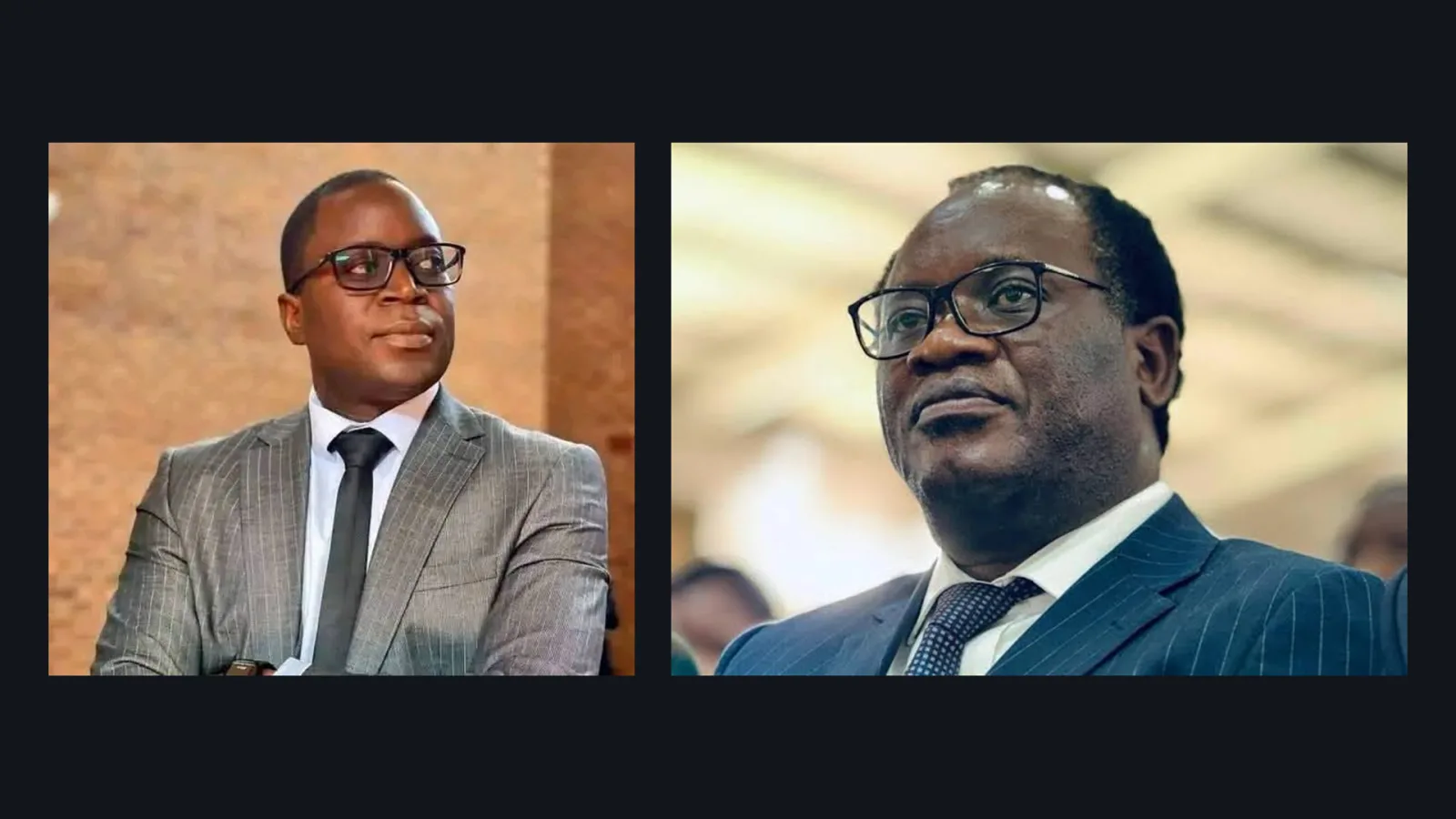
NRPUP leader Brian Mundubile and his running mate Makebi Zulu were questioned by police in Lusaka on Thursday over the alleged offence of treason and remain in custody as inquiries continue.
Key takeaways
- Police public relations officer Godfrey Chilabi says warn and caution statements for alleged treason were recorded from Brian Mundubile and Makebi Zulu on Thursday, 27 August 2026.
- The two NRPUP leaders were interviewed by law enforcement officers during the afternoon and remain in police custody while investigations continue.
- A warn and caution statement records a suspect’s account before any charging decision. It is not a charge, and no allegation against the pair has been tested in court.
- The step follows the 13 August Kabulonga raid, after which police said eleven people were held on suspicion of treason-related offences, and it comes as Mundubile’s election petition awaits a Constitutional Court hearing.
Zambia Police has recorded warn and caution statements from National Reconciliation for Unity and Prosperity (NRPUP) presidential candidate Brian Mundubile and his running mate Makebi Zulu in connection with the alleged offence of treason.
In a statement issued on Thursday evening, police public relations officer Godfrey Chilabi said the two were interviewed by law enforcement officers during the day and are currently being held in police custody. He said investigations into the matter are ongoing and that police will provide further information as inquiries progress.
Mr Chilabi said the development came after the two opposition leaders were taken in for questioning by law enforcement officers on Thursday afternoon.


What a warn and caution statement means
Under Zambian criminal procedure, a warn and caution statement is recorded from a suspect before investigators and prosecutors decide whether a matter should go to court. The suspect is told the offence under investigation and cautioned that anything recorded may be produced as evidence. A suspect may give their account, decline to comment or remain silent, and the statement itself is not a charge.
That distinction matters here. Mr Chilabi’s statement refers to an alleged offence and ongoing inquiries, which leaves the decision on any charge with investigators and the Director of Public Prosecutions rather than with a court. None of the allegations against the two men has been tested before a judge.
From the Kabulonga raid to the election petition
The treason inquiry has its roots in the security operation mounted in Lusaka’s Kabulonga area on 13 August, the day of the general election. Secretary to the Cabinet Patrick Kangwa said the raid recovered high-grade military weapons and led to several arrests, and he named Mundubile at the scene. Inspector General of Police Graphel Musamba later said eleven people had been apprehended on suspicion of treason-related offences, among them former Lunte MP Mutotwe Kafwaya, who police say was shot during an exchange of fire and later died in hospital.
Mundubile had finished second in the presidential vote counted that week, taking about 38 percent against President Hakainde Hichilema’s 60 percent when the Electoral Commission of Zambia declared an outright victory. He had claimed victory before the official declaration and later signaled his intention to petition the result. His petition eventually reached the Judiciary through unusual channels, after court premises closed on the filing deadline and the document was sent to the Chief Justice’s private email address before being referred to the Constitutional Court.
The party at the centre of the case was built on a reconciliation message. During the campaign, Mundubile said national reconciliation would be NRPUP’s first priority in its first 100 days in office.
Why it matters
The detention of a defeated presidential candidate and his running mate, days after his election petition was referred to the Constitutional Court, places two branches of the state under simultaneous pressure: a criminal investigation touching the opposition’s leadership and a constitutional dispute over the vote itself. How both are handled, visibly and by the rules, will shape perceptions of Zambia’s institutions at a moment when the country is asking investors and lenders to look past the election and focus on an IMF-backed reform programme.
For business, the near-term question is procedural. Treason allegations against the leadership of the main opposition feed into the country-risk assessments that price Zambian assets, alongside the petition. The Zambian Economist’s analysis of the militia warnings that preceded these arrests set out what militia politics costs an economy that depends on copper receipts and returning capital markets.
Three things now merit watching: whether the Director of Public Prosecutions approves a formal charge, how long the two men remain in custody, and whether the Constitutional Court schedules the election petition. This story will be updated as confirmed details emerge.
Related coverage
- Zambia Arrests Suspected Militia Members in Kabulonga Raid, Presidential Candidate Mundubile Named at Scene
- Kafwaya Was Shot and Later Died: Police on the Kabulonga Raid That Killed the Former Lunte MP
- Judiciary Confirms Receipt of Presidential Petition Sent to Chief Justice’s Private Email
- Zambia Courts Closed as Mundubile Election Petition Deadline Arrives
- Why Zambia Cannot Afford Militias: The Economics of Hichilema’s Warning
- The Economics of Zambia’s 2026 Election
WARNING! All rights reserved. This material and all other digital content on this website may not be reproduced, published, broadcast, rewritten, or redistributed, in whole or in part, without the prior express permission of The Zambian Economist. Where permission is granted, the content must be clearly credited to “The Zambian Economist,” with “www.zambianeconomist.com” prominently displayed.
WhatsApp: +260775574228 | Email: info@zambianeconomist.com
© 2026 The Zambian Economist.
Work With The Zambian Economist
nnFor the full timeline of what followed, read Ten Days That Tested Zambia: Hichilema’s Re-election, Sealed Courts and a Cooling Inflation Rate.
nUpdate, 30 August: lawyer Milner Katolo says the two have now been charged with one count of treason, bringing the total accused in the matter to eighteen. Read: NRPUP Leaders Charged With Treason as Case Docket Rises to 18.